Wear the Fandom: How Opening-Night Colors Became Desi America’s Loudest Box Office Report
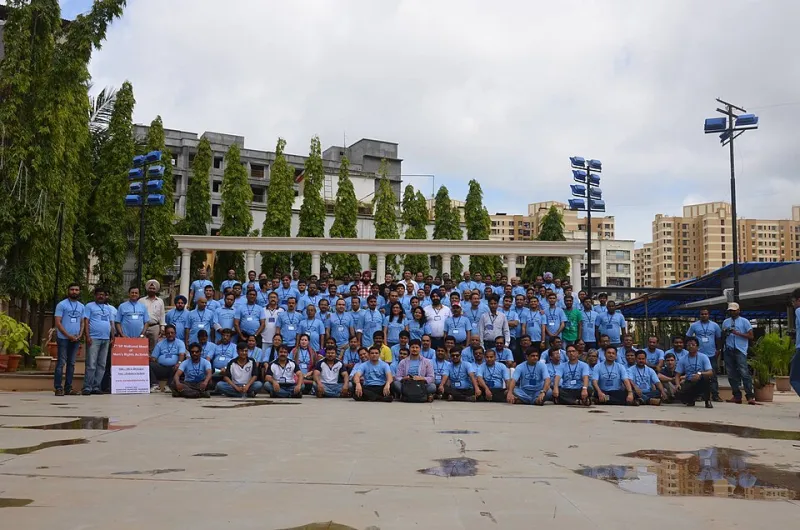
Photo: Amartya.talukdar, CC BY-SA 4.0, via Wikimedia Commons
There’s a moment, about forty minutes before a big Indian release starts in Dallas or Edison or Fremont, when the theater lobby stops being a lobby. It becomes a runway, a reunion, and a very loud opinion poll all at once. You can read the room without checking a single box-office tracker. The color code tells you everything.
In 2026, that code has gotten sharper. Desi audiences in the US aren’t just showing up for opening night — they’re showing up dressed like they’re part of the production. A mustard-yellow kurta here, a jersey with a decade-old number there, a bangle stack that clinks like a group-chat notification. The outfits are the marketing. And the marketing is working.
The Lobby Is the First Screen
Walk into a Friday-night show for a big Telugu actioner in the Chicago suburbs and you’ll see a sea of unapologetic fan colors. Not the muted “nice dinner” palette. We’re talking about the specific shade a star’s fan club has claimed for years, worn by people who may or may not have seen the actor’s last three films in theaters. It’s tribal, but in the friendliest way. Someone’s holding a handmade poster. Someone else has a phone case with the release date printed on it. The lobby has already decided the film is an event.
Then drive twenty minutes to a Malayalam drama playing in the same multiplex, and the dress code shifts. Fewer jerseys. More earthy tones, linen shirts, a general air of “we heard this one is good.” It’s not that the excitement is lower — it’s that the signal is different. The color code isn’t shouting. It’s nodding knowingly.
That contrast is the whole story of 2026’s desi box office in America. Regional loyalty has always mattered, but now it’s wearable. And on opening weekend, it’s visible before a single review lands.
Saree Palettes as Regional Radio
Ask anyone who’s been to a desi opening night in the last year: the saree is not neutral. A deep maroon with gold border reads one way. A pastel organza reads another. In cities with large Telugu and Tamil communities, you’ll see women coordinate without coordinating — a group of friends in similar jewel tones, like they all got the same late-night voice note about what to wear.
It sounds superficial until you realize what it’s doing. It’s a low-stakes way of saying, “I’m here for this one.” The saree becomes a regional radio signal. In a packed AMC in Atlanta, you can spot the Kannada-film crowd by the sandalwood tones and the understated jewelry. The Hindi-film crowd might lean into the big-screen glam — sharper cuts, brighter colors, the kind of outfit that says “we’re going out after this.”
In 2026, that’s not just fashion. It’s a soft launch of word-of-mouth. The people who dress up are usually the people who post. And the people who post are the ones who fill the second weekend.
The Jersey Is a Receipt
Let’s talk about the jerseys. Not sports jerseys — fan-made film jerseys, the kind you order from a small shop in Hyderabad or pick up at a desi grocery store counter in New Jersey. They’re not subtle. They usually have a star’s face, a catchphrase, or a release date on the back. And in 2026, they’ve become the most honest opening-night receipt in the business.
A jersey says: I’m not here because the trailer was good. I’m here because I’m already in. That’s a different kind of ticket buyer. Studios know it. That’s why some US distributors now quietly watch what’s trending in the lobby — the photos, the reels, the group shots — as a real-time temperature check. If the jerseys are out in force on Friday, the Saturday shows are probably safe.
And here’s the casual twist: you don’t have to be a superfan to wear one. Plenty of people show up in a plain T-shirt and still get the appeal. The jersey is a conversation starter, not a gate. “Which show are you here for?” is the most common sentence in any desi theater line, and the outfit just answers it faster.
What the Colors Say About 2026’s Hits
Trace a few 2026 release weekends and a pattern shows up. The films that win the diaspora conversation — not just the opening weekend, but the Monday-morning group-chat debate — are the ones that generate a dress code early. It might be a specific shade of saffron for a period drama. It might be a black-and-white theme for a gritty thriller. It might be as simple as “wear your loudest shirt” for a comedy that becomes a family outing.
The color code isn’t a guarantee of quality. Nobody’s saying that. But it is a leading indicator of enthusiasm, and enthusiasm travels. A theater lobby full of coordinated outfits becomes a photo dump. The photo dump becomes a story. The story becomes a reason for someone in another city to book a ticket.
That’s the part the box-office charts can’t capture. By the time the numbers post on Monday, the real campaign has already been running all weekend — in line for popcorn, in the parking lot, in the fifteen minutes before the trailers start.
The Fine Print of the Dress Code
There is one rule, and it’s the same rule that governs the rest of desi moviegoing in America: don’t make it weird. The color code is an invitation, not an entrance exam. You can wear jeans. You can wear a hoodie. You can wear whatever gets you to the theater on time, because in 2026 the biggest flex isn’t the outfit — it’s the seat you actually booked before the show sold out.
But if you do show up in the right color, you’ll notice something. The usher doesn’t care. The stranger in the next seat might nod. And somewhere in the group chat, a photo of the lobby will get forwarded with the caption: “See, I told you this one was going to be big.”
That’s the color code. It’s not science. It’s a vibe with a box-office receipt attached.