The Three-Minute Verdict: How Desi Grandparents Became 2026's Real Film Gatekeepers
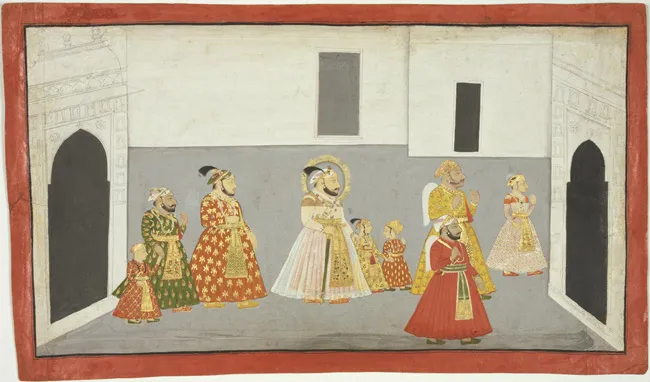
Photo: Artist/maker unknown, India, Public domain, via Wikimedia Commons
It is 9:12 a.m. in Frisco, Texas, and the family group chat has 14 unread messages. Then comes the voice note. Three minutes and forty-seven seconds from Nani, recorded after her morning walk, delivered with the seriousness of a Supreme Court ruling. She does not call it a review. She calls it a public service announcement. 'Don't waste the gas,' she says. 'Wait for streaming.' Somewhere across the Metroplex, a Saturday plan dies.
This is the grandparent test, and in 2026 it has become one of the most powerful forces in how Indian movies travel through desi America. Not the biggest opening-day number. Not the loudest trailer. The voice note from an elder who has seen more films than most critics and has no interest in being polite about them.
The Review That Arrives Sideways
Forget Letterboxd. Forget Rotten Tomatoes. In many US desi households, the real review arrives sideways: a phone call after temple, a voice note between Costco runs, a comment dropped in the family chat while everyone else is at soccer practice. Grandparents are not writing scored reviews. They are making judgments, and those judgments travel fast.
Part of it is time. Part of it is memory. They remember the films their own parents took them to, the songs that played at weddings, the actors who could carry a scene without a fight sequence. When they watch a new Indian release, they are not just watching a movie. They are comparing it to a lifetime of movies. That gives their verdict a kind of weight that a five-star rating rarely has.
For diaspora families, the grandparent test is also practical. A full-family theater trip in 2026 is not a small decision. There are tickets, parking, babysitters for the youngest, homework for the oldest, and the question of whether everyone can sit through a two-hour-and-forty-minute film without a mutiny. A grandparent's yes reduces the risk. A grandparent's no kills the plan.
Why Their Yes Carries Weight
Desi parents in their thirties and forties grew up with these stars, but they do not have time to read every review. Teenagers want spectacle. Younger kids want snacks. The grandparent is the bridge. If an elder says 'this one feels like the movies we used to watch,' the family listens. If an elder says 'this is not for us,' the family listens even harder.
That is the trust signal. Grandparents are not easily impressed by marketing. They do not care about opening-weekend records. They care whether the film respects the family sitting around the TV. They ask the questions that distributors sometimes forget: Is it okay for the kids? Will my son-in-law stay awake? Does the second half fall apart? Is the comedy actually funny, or just loud?
They are not prudes, but they are precise. They may love a mass action film if the emotion lands. They may reject a glossy family drama if the family feels fake. Their approval is not about being old-fashioned. It is about recognition. They want to see themselves, their neighbors, their memories, their language on screen. When that happens, they become the most effective marketing department a film could ask for.
What They Are Actually Judging
Authenticity is the first test. Grandparents notice dialect. They notice whether a wedding ritual is staged correctly. They notice if a village kitchen looks like a set or a home. They notice when elder characters are written as props, standing in the background with a shawl and a blessing. In 2026, more filmmakers are giving older characters actual opinions, actual humor, actual flaws. That helps. But elders can still smell a costume.
The second test is nostalgia, but not the lazy kind. They do not want a museum piece. They want a film that understands what they left behind and what they built here. A story about immigration sacrifice can land hard. A comedy about a family split between two countries can land harder. The grandparent test is less about morality than recognition. If they see their own life in the frame, they recommend it. If they see a caricature, they pass.
The third test is whether the movie earns the family trip. This is where the verdict becomes operational. In Edison, New Jersey, and Fremont, California, in Irving, Texas, and Naperville, Illinois, Sunday afternoon shows are full of multigenerational groups. Grandparents, parents, kids, sometimes cousins. They need seats together. They need an interval. They need snacks that satisfy three generations. A grandparent's yes turns a movie into an outing. A no turns it into a later stream.
The Marketers Have Noticed
US distributors and community organizers are paying attention. In 2026, elder outreach is no longer an afterthought. There are early shows, community screenings, temple and association tie-ins, and family-pack promotions that quietly target the people who actually decide. Radio still matters. So do local WhatsApp groups and the auntie network that runs on voice notes and forwarded flyers.
But there is a catch. Grandparents can spot pandering. A film that tries too hard to flatter them will get a voice note that says 'artificial.' The most effective outreach is not a celebrity endorsement. It is letting elders talk to each other. A recommendation from a temple uncle in Dallas carries more weight in a Chicago group chat than a billboard on the highway. That word-of-mouth moves slower, but it sticks.
Filmmakers are learning too. Casting a familiar elder actor is not enough. Writing them as full characters is the point. The films that pass the grandparent test in 2026 tend to be the ones that treat older people as part of the story, not as a reminder of the old country. That sounds simple. It is not. It is the difference between a family drama that plays in the background and one that gets a second voice note saying 'you should go.'
The Limits of the Test
The grandparent test is not a monolith. One grandmother loves mass films. Another wants only Malayalam family dramas. One grandfather will watch anything with a good song. Another will walk out if the subtitles are too small. Regional tastes differ, language differences matter, and not every elder agrees with the one sitting next to them. In some homes, the verdict is a debate, not a decree.
There is also a risk. A film that is experimental or new may fail the test simply because it does not match a memory. That is the trade-off. The grandparent test rewards authenticity and family watchability. It can penalize a younger filmmaker trying something different. But it is not going away. The diaspora is aging, and the generation that immigrated in the 1980s and 1990s is now becoming the generation that grandparents the group chat.
What the Voice Notes Tell Us
They tell us that Indian cinema in America is no longer just a young person's night out. It is a family negotiation. It is a grandmother in a cardigan saying 'this one is good' and a theater in the suburbs filling up on a Sunday because of it. The voice note is not a formal review. It is something more useful: a verdict from someone who has been watching Indian films for fifty years and has no patience for waste.
So the next time the family chat lights up with a three-minute voice note, listen closely. That is not just an elder sharing an opinion. That is 2026's most trusted film critic, deciding whether the whole family gets in the car.