The Hook Lands First: How 2026 Indian Film Songs Build a US Desi Fan Base Before Opening Night
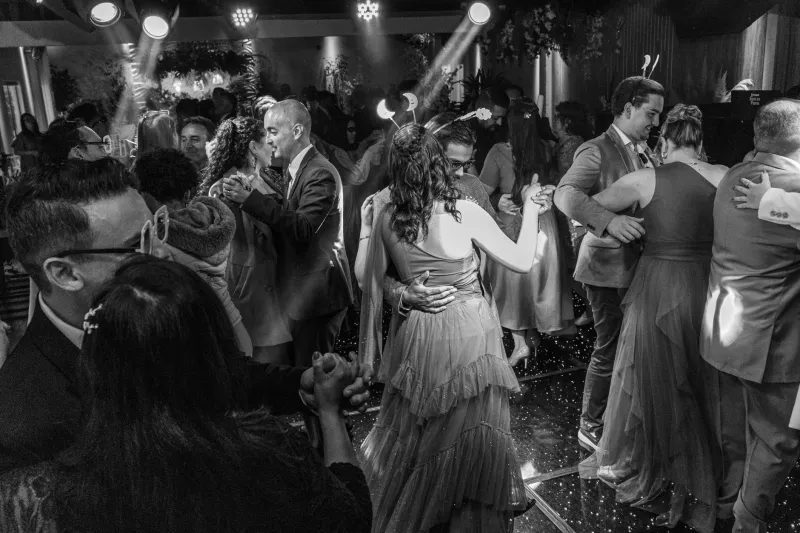
Photo: Indian wedding DJ booth with colorful dance floor lights and guests dancing, via cdn.pixabay.com
There is a specific kind of chaos that happens in a desi group chat when a new Indian film song lands. First comes the link. Then the voice note. Then somebody’s cousin in Dallas says the hook has been stuck in her head since 7 a.m., and somebody else admits they have already watched the reel edit 14 times. The movie itself? Still weeks away.
That is the 2026 release cycle for a growing number of Indian films aimed at US desi audiences. The song is no longer the opening act for the movie. In many cases, it is the opening act for the entire conversation. Before a single showtime is posted at the theater in Edison or the multiplex in Frisco, the track has already lived several lives: teaser clip, Instagram reel, wedding-sangeet rehearsal, car-ride anthem, gym playlist filler, and family-group-chat debate.
The 15-Second Interview
“If the hook does not work in the first 15 seconds, we are not adding it to the Friday drive-time list,” says Priya Raman, a Dallas-based playlist curator who runs a US desi music queue for commuters. “People are not sitting down with headphones for a three-minute listening session anymore. They are merging onto the tollway. The song has to introduce itself fast.”
That compression is shaping how music teams roll out songs in 2026. A teaser clip often arrives first, cut to the most repeatable phrase in the track. Then comes the full single, a lyric video, a visualizer, and — increasingly — a set of open-ended assets for DJs and content creators: clean edits, extended intros, percussion-only stems, and short loops designed for reels.
“Producers used to treat music as part of the trailer package,” Raman says. “Now the smart ones are treating a song like a standalone release event. They want the wedding DJs, the reel editors, and the playlist curators to have it before the movie marketing even really starts.”
From Reel to Reception
The lifecycle usually starts on Instagram or YouTube Shorts, where a dance challenge, a slow-motion couple edit, or a punchy dialogue-and-drop clip does the early work. In US desi circles, that clip gets forwarded into WhatsApp groups and campus chats. Then the DJs get involved.
DJ Karan Mehta, who spins weddings and college events across New Jersey and Philadelphia, says his inbox now fills up with requests for songs from films that have not released yet. Couples send him clips from sangeet choreography videos. Cousins send him the same song with a different caption. By the time the movie opens, the track is already a wedding-floor test case.
“The sangeet is a focus group,” Mehta says. “If a song can get aunties, cousins, and the 12-year-olds on the floor at the same time, it is going to survive. If it only works for the choreographed group, it dies after the first chorus.”
He has adjusted his sets accordingly. A typical 2026 wedding weekend might include a pre-release song in the cocktail hour, a remixed version during the sangeet, and a full-throttle drop at the reception. The film’s release date becomes almost secondary. The music has already been A/B tested by a room full of people in formal wear.
The DJ’s Inbox Is the New Radio Chart
For US desi audiences, the old radio-chart model has never fully described how songs travel. A track can be massive in one suburb and invisible in another. The new pre-release economy runs on micro-signals: a DJ’s request list, a playlist’s skip rate, a reel’s save count, a cousin’s voice note.
Raman says she watches for a specific pattern. First, the song appears in short-form video edits. Then it shows up in workout playlists. Then people start requesting it in the car, where the audience is captive and the volume is high. “The gym queue is a real signal,” she says. “If people are lifting to a song from a movie that is not out yet, you know the hook has escaped the marketing plan and become part of daily life.”
That is especially true for family-car anthems. In desi households across the US, the drive to school, work, or the temple is a shared listening space. A song that survives the minivan test — kids in the back, parents up front, nobody reaching for the skip button — has a different kind of staying power. Producers have noticed. Some 2026 campaigns are quietly prioritizing clean, family-friendly edits and lyric videos that work on a phone mounted to a dashboard.
What Producers Are Learning
Music teams are also getting smarter about timing. Instead of dropping one song and hoping it carries the film, many 2026 releases are staggered: a teaser hook, a full single, a wedding-friendly remix, and a slow-burn version for the weeks closer to opening. The goal is not just streams. It is memorability across different rooms.
That means US desi DJs and curators are being treated less like afterthoughts and more like early distribution partners. Some production houses now send out DJ packs days before the public release. Others seed songs with South Asian student associations and community radio hosts. The old model waited for the film to make the song famous. The 2026 model asks the song to make the film feel familiar.
There is a risk, of course. Overexposure is real. A hook that is everywhere in June can feel exhausted by August. If the pre-release push outpaces the movie’s actual release, audiences may arrive at the theater already tired of the soundtrack. The sweet spot is a song that feels discovered, not mandated.
The New Opening Night
On opening night in 2026, the audience is not hearing most of these songs for the first time. They are hearing them in context. The theater becomes the place where the reel edit, the wedding remix, and the car-ride version finally meet the story. That changes the experience. People lean in for the song they already know. They wait for the drop. They whisper the lyric before the actor does.
For US desi audiences, that is not a spoiler. It is the point. The music has already done its job: it made the film feel like an event before the first ticket was sold. And for producers, the lesson is simple. In 2026, the song is not just part of the movie. It is the first release.