Three Languages, One Theater: How Desi Families Pick a Version in 2026
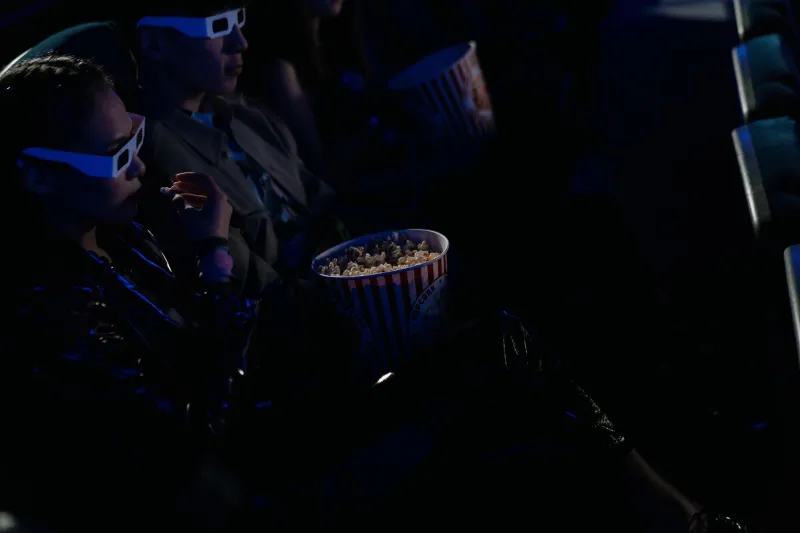
The negotiations usually happen in the parking lot. A multiplex in Frisco, Texas, or Edison, New Jersey, or Fremont, California — the geography changes, the argument doesn't. Mom wants the original. Dad wants the original and would like everyone to know he wants the original. The fourteen-year-old wants the Hindi dub, because that is what the group chat is seeing on Saturday. Grandma, in town from Vijayawada for the winter, would prefer that everyone stop debating and get out of the car before the trailers end.
In 2026, that scene has become the most reliable piece of drama in Indian cinema's American run. The film itself is no longer the only decision. The version is.
Same Film, Three Different Tickets
Walk up to a kiosk for a big South Indian release this year and the listings can run six or seven deep: Telugu original, Tamil original, Hindi-dubbed, Malayalam-dubbed, English-subtitled screenings at specific times, and often a dubbed version in a second-tier slot the distributor added after the first weekend sold out. Chains have gotten fluent at this. What used to be a specialty booking handled by a regional distributor is now a routine programming puzzle, and the puzzle is solved by presales, not sentiment.
Exhibitors will tell you the pattern is blunt. The original leads in hubs with a dense speaker community. The Hindi dub outperforms in suburbs where the desi population is thinner and more mixed — households where one parent grew up on Bollywood and the other grew up on Tamil films, and nobody wants to spend two and a half hours reading. English-subtitled shows pull the second-generation crowd and the non-Indian plus-ones, and they have quietly become the default "bring a friend" screening.
The Family Veto, Explained
What makes the 2026 version of this interesting is that it is no longer a language problem. It is a coalition problem. Four people, three preferences, one car.
The unwritten rules have calcified into something close to folk custom:
- Whoever is driving decides the theater; whoever is paying decides the language. This is the most cited arrangement, and it usually means the dub wins, because the person paying is often the person least comfortable reading fast subtitles for 160 minutes.
- Dialogue-dense films default to the original. A courtroom drama, a satire, a talky family saga — these get watched in the language the jokes were written in, subtitles be damned. Spectacle is more forgiving; a mass action film dubbed into Hindi loses less.
- The youngest fluent reader sets the ceiling. If the ten-year-old reads at a clip that can keep up with rapid-fire subtitle cards, the family goes subtitled. If not, they go dubbed and apologize to nobody.
- Grandparents get a veto, once. One film per visit, original audio. Everyone else deals.
What nobody says out loud is that the dub is often the more social choice. Subtitled screenings are quiet rooms. Dubbed screenings are full of reaction — the laugh landing on the beat instead of a half-second late, the uncle in row H who comments on the plot and is somehow not wrong.
What the Streamers Already Know
On streaming, the debate has effectively been settled and the settlement is invisible. Most major platforms now default a viewer into a dubbed audio track based on account language settings, with the original tucked one click away. Completion rates for dubbed tracks run notably higher than for subtitled ones — a fact that platforms have known for years and no longer pretend otherwise about.
But there is a second data point that rarely gets mentioned: rewatch behavior skews original. People sample in the dub and come back for the original. The dub gets you through the movie once. The original is what you put on in the background while cooking.
The 2026 twist is that dubbing has become good enough to be a genuine choice rather than a compromise. The era of the obviously mismatched voice — the same four dubbing artists covering every male lead in the industry — is mostly over for major releases. Studios now cast dubbing talent with the same care as the marketing, because the dubbed version is not a consolation prize anymore. In several US markets, it is the version that carries the opening weekend.
Why This Is the Crossover Question
Here is the uncomfortable part for anyone who cares about regional cinema reaching wider American audiences: dubbing is both the engine and the brake.
It is the engine because it removes the reading tax. A family that would never commit to subtitles will buy four tickets to a Telugu film if it is offered in Hindi. That is real, incremental box office from people who are not speakers of the original language, and it is the single biggest reason a mid-budget film from Hyderabad can now post numbers in Ohio.
It is the brake because a dubbed hit does not necessarily create a subtitled audience. The crossover stays transactional. People come for the story, not the language, and they leave without ever having heard the actors' actual voices. Directors notice. Some have started saying in interviews that they would rather have a smaller subtitled release than a large dubbed one, which is a lovely sentiment and an impossible business position.
Malayalam cinema sits at the other end of the spectrum. It has largely declined to chase the dub market, and its US audience is smaller, more committed, and far more likely to be reading. That is not an accident of taste. It is a distribution strategy with a very specific ceiling and a very loyal floor.
The Spoiler Schism
The funniest consequence of all this is that families no longer see the same movie. Watch the Hindi dub and the punchline lands differently. Watch the original and the slang is intact. Watch the subtitled version and the translation flattens a reference the entire theater around you just laughed at.
Which means the Monday group chat contains people arguing about a film they technically all saw together, in versions that were not quite the same film. Somebody quotes a line. Somebody else says, that's not what he said.
In 2026, that is not a bug. It is the shape of Indian cinema in America — big enough now to need three doors, and still small enough that everyone you know is standing in a different one, waving.