The Joke Across the Ocean: How 2026's Indian Film Subtitles Shape What US Audiences Laugh At
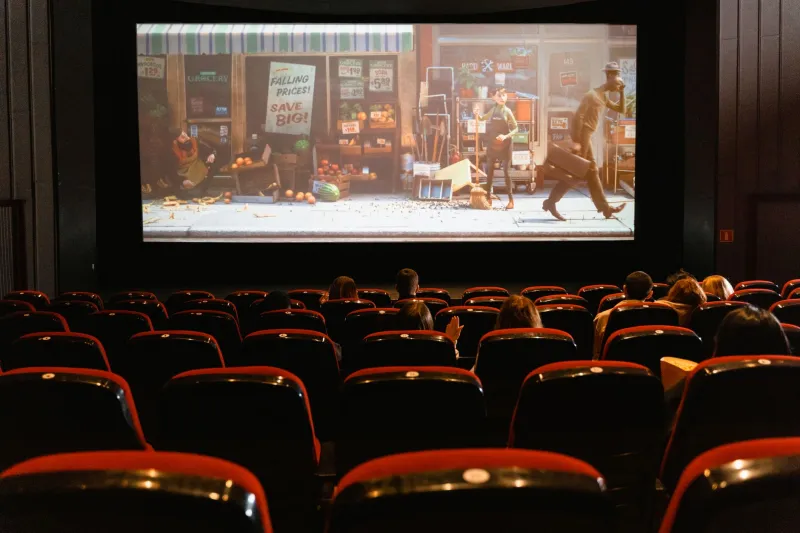
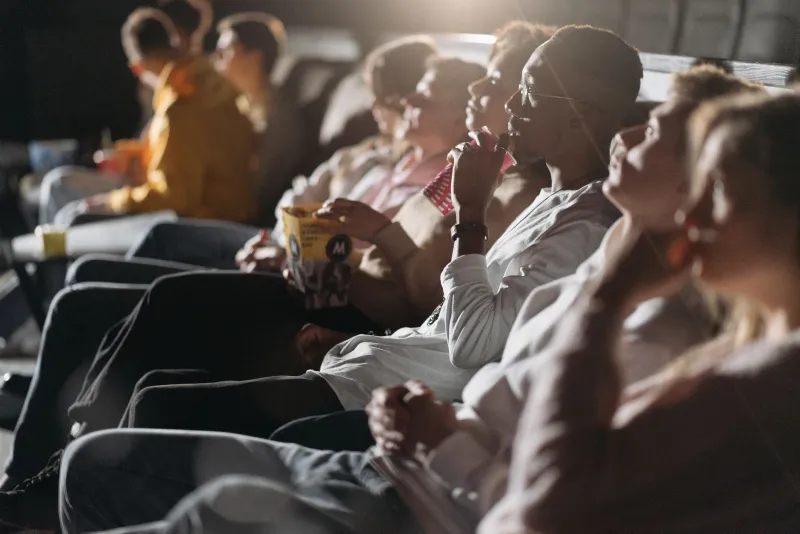
There is a particular sound in a US theater when an Indian film lands a joke that only half the room understands. First comes the laugh from the diaspora viewers. Then comes a half-second of silence. Then comes the second laugh, from everyone who just read the subtitle and got it late. In 2026, that rhythm has become part of the Indian movie experience in America. And the English subtitle track is the invisible co-star making it happen.
Subtitles are usually treated as a technical necessity: turn the language into English, keep the timing, stay out of the way. But anyone who has watched an Indian film with a US audience knows that is not how it works. The subtitle is a translator, an editor, and sometimes an uncredited comedian. It decides whether a punchline is explained, softened, or sacrificed. In 2026, as more Hindi, Telugu, and Tamil releases arrive in US theaters and on streamers, that decision has become a cultural event in itself.
The subtitle track is a co-writer
A good subtitle does not just replace words. It replaces context. Indian films are full of code-switching, regional slang, family honorifics, song lyrics, and references that assume a lifetime of local movie-watching. An English track has to make choices fast. Does it translate a Telugu proverb literally and let the audience catch up? Does it swap a Hindi insult for an American equivalent? Does it explain a Tamil film reference in brackets, or trust the viewer to enjoy being lost?
Those choices shape the emotional temperature of a scene. A threat can become a joke. A joke can become a lecture. A romantic line can become a Hallmark card. And in 2026, US audiences are becoming more aware of the seam.
Idioms: when the words arrive before the feeling
Consider the humble Indian English subtitle for a family argument. A character says something that, in Hindi or Telugu, lands like a slap because of tone, relation, and history. The subtitle offers a clean English sentence: You have disappointed me. It is accurate. It is also a little cold. The original may carry shame, affection, and a lifetime of obligation in three words. The subtitle carries the information but not always the weather.
This is where 2026's best tracks get creative. They use contractions, fragments, and carefully placed punctuation. They let a character say Fine. instead of I am okay with this. They know that a period can do the work of a sigh. The weaker tracks explain too much, turning a sharp exchange into a plot summary. The audience still follows the story, but they miss the joke in the corner of the room.
Songs: translating poetry or explaining plot
Indian film songs are a special subtitle problem. A song can be a dream sequence, a confession, a montage, or a threat. Some 2026 releases leaned into lyrical subtitles that read like poetry. Others went practical, translating only the lines that push the story forward. Both approaches can work, but they create different viewers. One audience gets mood. The other gets information.
For diaspora viewers, song subtitles can also be strangely emotional. You may know the original lyric by heart and still read the English version to see how it has been reframed. When a translation chooses a simpler image, you notice. When it preserves a strange local metaphor, you feel seen. The subtitle becomes a small negotiation between the film you grew up with and the film your American friend is watching beside you.
Code-switching: who gets the English and who doesn't
Indian films often mix languages inside a single scene. A character may speak English to sound modern, Hindi to sound intimate, and a regional language to sound like home. Subtitles have to decide which of those switches matter. If everything becomes English on screen, the hierarchy disappears. If the track marks every shift, it can feel like a linguistics seminar.
The most interesting 2026 subtitles found a middle path. They let untranslated words sit for a beat. They used italics sparingly. They trusted the audience to understand that a character switching languages is doing something social, not just linguistic. For US viewers outside the diaspora, that trust can be the difference between watching a foreign film and feeling like an outsider at a family dinner.
Regional humor and the diaspora laugh track
Humor is where subtitles take the biggest risks. A Tamil comedy may run on wordplay that cannot survive translation. A Telugu scene may depend on a colloquial comparison that means nothing in English. A Hindi joke may be funny because of a film reference from the 1990s. The subtitle writer has to choose: explain, adapt, or let it go.
In 2026, US audiences are increasingly split between viewers who grew up with the original language and viewers who did not. The diaspora laugh track is real. It starts early, sometimes before the subtitle appears. Then the rest of the room catches up. That delay is not a failure. It is a reminder that translation is not a loss of meaning but a change in timing. The joke still lands. It just lands differently.
Where subtitles quietly rewrite the scene
The biggest subtitling choices are often invisible. A mother's scolding becomes gentler. A villain's insult becomes more generic. A religious reference becomes cultural color. A caste or class marker disappears because the English line has no easy equivalent. These are not small details. They are the scaffolding of the scene.
The best 2026 tracks do not pretend to be neutral. They choose a voice. They decide whether the film should sound American, Indian, or somewhere in between. And they accept that every choice will please one viewer and irritate another. That is the nature of the job.
The diaspora viewer is not a monolith
US diaspora audiences are not a single target. Some viewers want subtitles that preserve every nuance. Some want a smooth ride. Some watch with parents who read English slowly. Some watch with friends who have never seen an Indian film. A single subtitle track has to serve all of them at once, which is impossible. The wonder is that it works as often as it does.
So the next time a joke lands a half-second late in a US theater, listen for the second laugh. That is the subtitle doing its job: not erasing the distance between languages, but building a small bridge across it. In 2026, that bridge is one of the most important special effects in Indian cinema.