The Lit Screen in Row F: How Desi Moviegoers Are Rewriting Indian Cinema Etiquette
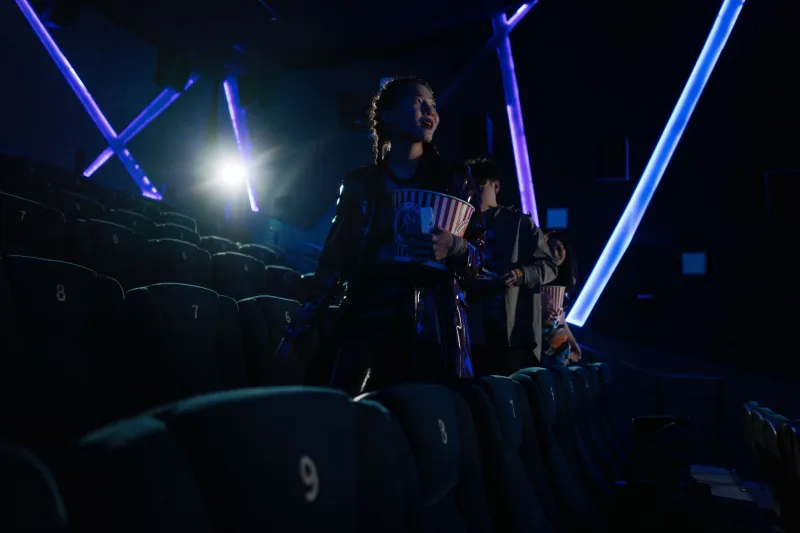
In a packed multiplex in Frisco, Texas, the big moment arrives: a hero walks into a rain-soaked confrontation, the score swells, and then—right on cue—a phone lights up in Row F. It is not a call. It is a subtitle check. A few seats over, another screen glows for a group chat. By the interval, at least four people in the same row have used their phones without leaving their seats.
For anyone raised on the church-of-cinema rule—silence, darkness, eyes forward—this looks like the end of etiquette. For a growing slice of the US desi audience, it looks more like a negotiation. Indian films in America are multilingual, subtitled, social, and long. The phone has become part of the screening, not always an enemy of it. The question for exhibitors in 2026 is whether that is a problem to police or a behavior to understand.
The Glow Is Not Going Away
Theater managers in Indian-majority markets say the second-screen habit is now ordinary. It is not limited to bored teenagers or bad manners. It shows up among college students, tech workers, families, and older viewers who need a quick translation or a plot reminder.
One manager at a 14-screen multiplex outside Dallas says the shift became obvious after the pandemic. Before, ushers might get a complaint about a phone once a week. Now, he says, it is closer to once a show on busy weekends. The complaints are not usually about calls. They are about brightness, repeat checking, and the feeling that someone in the row is watching a different movie on a smaller screen.
That distinction matters. A phone call is a disruption. A glance at subtitles is a workaround. A scroll through Instagram is something else. Theaters are trying to tell the difference without turning every Indian film screening into a confrontation.
Why Subtitles Changed the Game
Indian cinema has always travelled in multiple language versions, but the US market often gets a mix: Telugu, Tamil, Hindi, Malayalam, and Kannada releases with English subtitles, sometimes with uneven translation quality. For diaspora audiences, the subtitle track is not decoration. It is the bridge.
When a joke does not land or a culturally specific reference flies past, the phone becomes a tiny research desk. Viewers check a name, a song lyric, a family relationship, or a political reference. They also check the group chat to see whether everyone else caught the same thing.
A cultural critic based in Chicago says this is not simply rudeness imported from streaming. It is a collision of habits. At home, viewers pause, rewind, and Google. In a theater, they cannot. The phone fills the gap. The critic argues that exhibitors who treat every glance as a violation miss the larger point: the audience is trying to stay engaged, not check out.
The Streaming Reflex
There is also the simple matter of attention. Streaming trained a generation to watch with a second screen nearby. A sports score, a work message, a delivery update—none of it waits for the credits. Indian films, which often run two and a half to three hours, ask for a longer commitment than most American releases. The phone is a pressure valve.
For exhibitors, that creates a box-office puzzle. Indian films are a dependable niche business in the US, especially in markets like New Jersey, the Bay Area, Dallas, Chicago, and Atlanta. A sold-out Friday show for a Telugu actioner can outperform a mainstream holdover. Theaters do not want to alienate that audience with heavy-handed rules. But they also do not want the screening to feel like a living room.
Some chains have adjusted with pre-show reminders rather than mid-film crackdowns. Others rely on ushers who ask politely, then more firmly. The most common compromise is practical: keep the brightness down, keep the phone low, step out for anything longer than a glance. It is less a rule than a request.
The Etiquette Divide
The divide is generational and cultural. Older viewers often see the phone as a small act of disrespect—a refusal to give the film the room it deserves. Younger viewers see the same behavior as harmless multitasking, especially during a song sequence or a slow stretch.
A fan in Edison, New Jersey, says she uses her phone only to check subtitles when the English track is confusing. She does not see that as a betrayal of the big screen. Her father disagrees. For him, the theater is still a shared room, and the shared room has rules.
Both are right about something. The theater is a collective experience. It is also an expensive night out. When tickets, parking, snacks, and babysitters are added up, some viewers feel entitled to use their time—and their phone—as they please.
A New Contract, Not a Broken One
What is happening in US Indian film screenings is not the death of etiquette. It is the rewriting of a contract between audience and exhibitor. The old contract said: you sit in the dark, you stay quiet, you give the film your full attention. The new one is messier: you stay mostly quiet, you keep the phone low, you do not ruin the person beside you.
That contract will not satisfy everyone. But it may be the only workable one for a diaspora audience that is used to watching Indian cinema with commentary, translation, and community close at hand. The big screen still has something the phone cannot offer: the collective gasp, the shared laugh, the applause when a star appears. Theaters that protect those moments—without treating every lit screen as a crime—may find that the audience is still willing to show up.
For Rangitaranga readers, the lesson is simple. The phone is not going away. The question is whether the movie theater can make room for it without letting it take over the room.